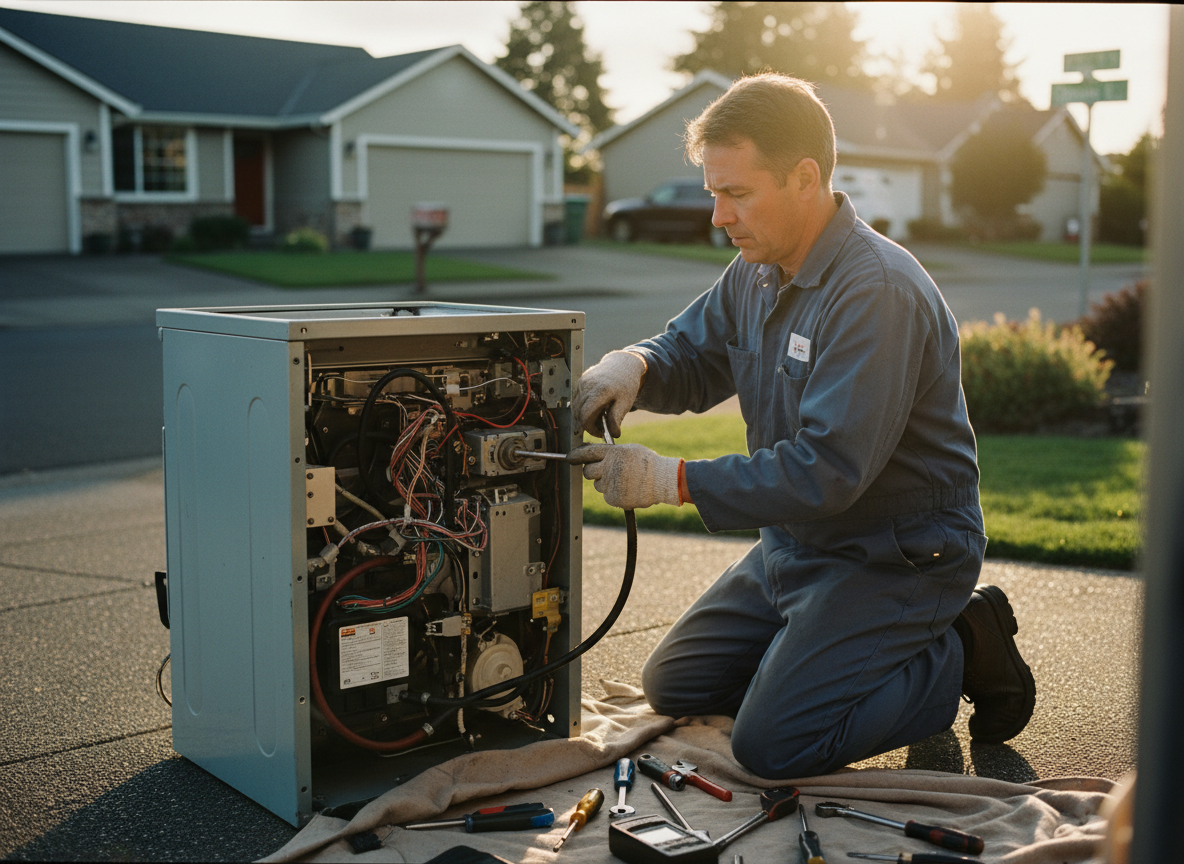
Gresham homes built before the 1980s in neighborhoods like Rockwood and Downtown often have washing machines installed in utility rooms or basements with limited ventilation. Wet winters bring repeated high humidity and occasional flooding that corrodes drain pumps, inlet valves and control boards faster than in drier climates. Technicians see frequent failures on top-load models where water sits in the tub after a cycle because the drain hose sits too low relative to the standpipe, a setup common in older Multnomah County properties near Gresham Pioneer Cemetery.
Mild summers reduce overheating complaints but the constant moisture from Portland-area rain means electrical connections on front-load machines develop oxidation on the door lock and pressure switch terminals. When flooding occurs, sediment clogs the sump filter and recirculation pump, shortening machine life. Repair work here frequently requires replacing stainless-steel braided hoses with longer versions to keep the drain line above the flood line and adding a check valve to prevent backflow during heavy rain events.
Service calls in areas around Mt. Hood Community College commonly involve LG and Samsung direct-drive units where the rotor and stator fail after repeated power surges during winter storms. Parts availability through Portland suppliers keeps turnaround under 48 hours for most models. Homeowners in these neighborhoods benefit from having the machine pulled out for inspection of the floor drain and surrounding grade, because poor drainage turns a simple pump replacement into repeated callbacks.
Technician insight
In Gresham, the thing that catches most people out with Washing machine repair is how wet winters and occasional flooding in Rockwood basements corrode the drain pump and inlet valve on machines installed before homes had proper French drains, turning what looks like a simple clog into a full electrical replacement.
Rockwood Flood-Damaged Pump
A top-load washer in a Rockwood home stopped draining after heavy winter rain. Inspection showed sediment from local flooding had jammed the pump and rusted the wiring harness. The pump and harness were replaced, the drain hose was raised above the standpipe, and a check valve was added. The machine now completes cycles without backup even during subsequent storms.
How it works
- 1
Initial Assessment
Technician arrives at the Gresham address, confirms symptoms and checks power, water supply and drain height relative to local flooding patterns.
- 2
Component Testing
Motor, valves, control board and drain pump are tested with a multimeter while the machine is pulled away from the wall to inspect for moisture damage common after wet winters.
- 3
Repair or Part Replacement
Failed parts are replaced on site using stock carried in the van, with extra attention to sealing connections against future humidity and sediment from Multnomah County storms.
- 4
Final Verification
Full cycle is run, drain performance confirmed, and homeowner shown any drainage improvements needed to prevent repeat issues in Rockwood or Downtown homes.
Pricing
Upfront quote provided after inspection; most washing machine repairs fall into minor component swaps or full pump and valve jobs depending on model age and water exposure.