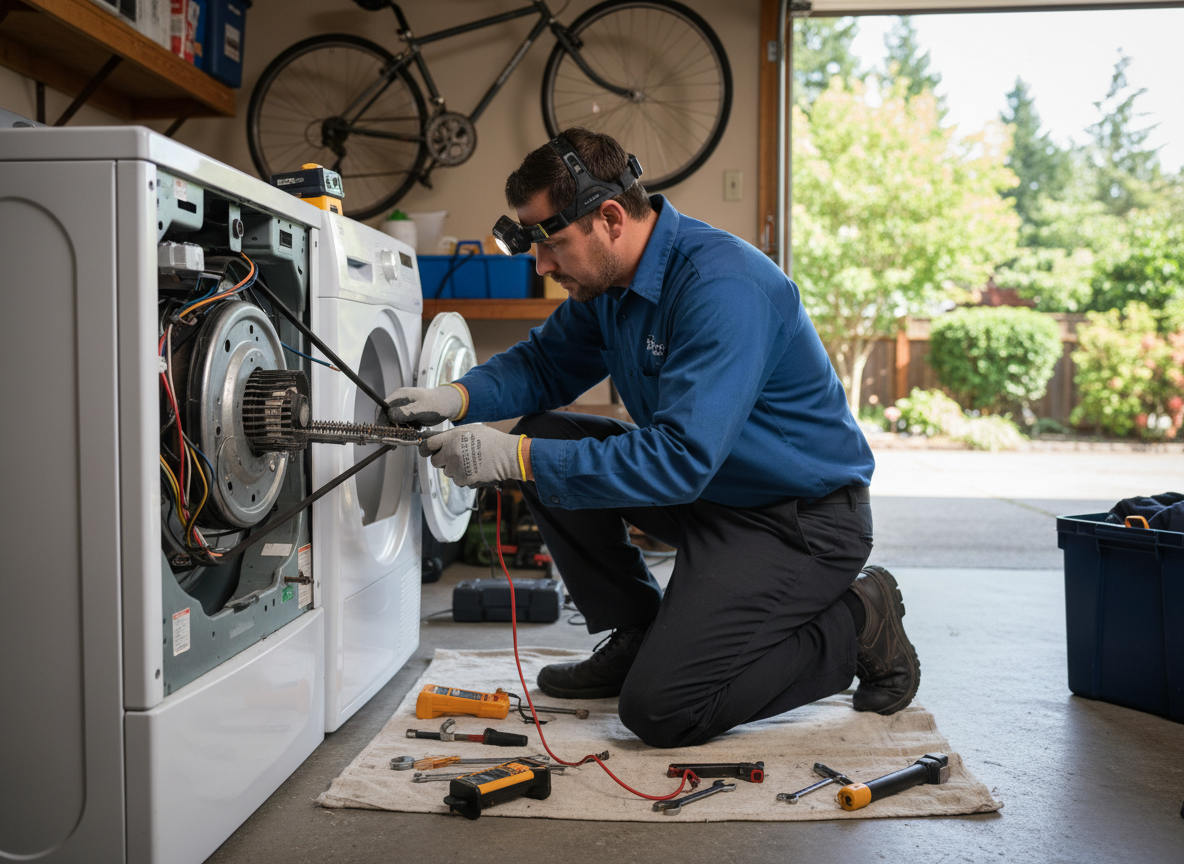
Dryer issues in Gresham often stem from prolonged exposure to damp winters that increase indoor humidity levels around the Mt. Hood Community College area and in Rockwood neighborhoods. Lint traps and exhaust vents accumulate moisture along with debris, leading to reduced airflow, longer drying cycles, and higher risk of overheating in homes built before widespread use of modern venting codes. Technicians frequently encounter flexible aluminum ducts crushed or disconnected in crawl spaces where occasional flooding saturates the ground near the Gresham Pioneer Cemetery.
Older housing stock throughout Multnomah County commonly features 240-volt circuits installed decades ago that now show corrosion from seasonal moisture. When a heating element fails, it is rarely the sole problem; restricted vents downstream cause the new element to fail again within months if the full exhaust path to the exterior is not cleared. Portland's mild summers provide little natural drying time, so residents run units year-round and accelerate wear on belts and idler pulleys.
Technicians check for proper termination of the vent outside the home, ensuring it clears the roofline or sidewall by at least twelve inches to prevent re-entry of moist air during heavy rains. In basements near Division Street, standing water after storms can short timer motors and electronic boards, requiring replacement rather than simple resets. These conditions differ from drier climates and demand extra attention to seal integrity around access panels.
Seasonal Maintenance Notes
Homeowners in Downtown Gresham benefit from pre-winter vent inspections before temperatures drop and rain increases. Clearing the full run from dryer to exterior termination reduces fire risk and restores efficiency lost to compacted lint mixed with water residue.
Technician insight
In Gresham, the thing that catches most people out with dryer repair is crushed or disconnected vents in crawl spaces of pre-1980 homes in Rockwood; wet winters push humid air back into the unit and destroy new heating elements within weeks if the full run is not cleared to the exterior.
Rockwood Dryer with Restricted Vent
A homeowner in Rockwood reported clothes remaining damp after full cycles during a stretch of heavy winter rain. Inspection revealed a crushed flexible vent under the house where soil saturation had shifted the ductwork. The vent was replaced with rigid pipe, the heating element was swapped after confirming it had shorted from back-pressure, and airflow was restored to safe levels.
How it works
- 1
Initial Assessment
Arrive at the Gresham residence and verify power supply, venting condition, and model specifics while noting any signs of prior water exposure from wet winters.
- 2
Component Testing
Measure resistance on the heating element, check belt tension, and inspect the exhaust path for blockages common in older Rockwood homes.
- 3
Repair Execution
Replace faulty parts, clear the vent run to the exterior, and confirm proper airflow before reassembling.
- 4
Final Verification
Run a test cycle and confirm safe operation, then advise on placement away from potential flood zones near low-lying areas.
Pricing
Upfront quotes provided after inspection; rates reflect job complexity in older Multnomah County homes.