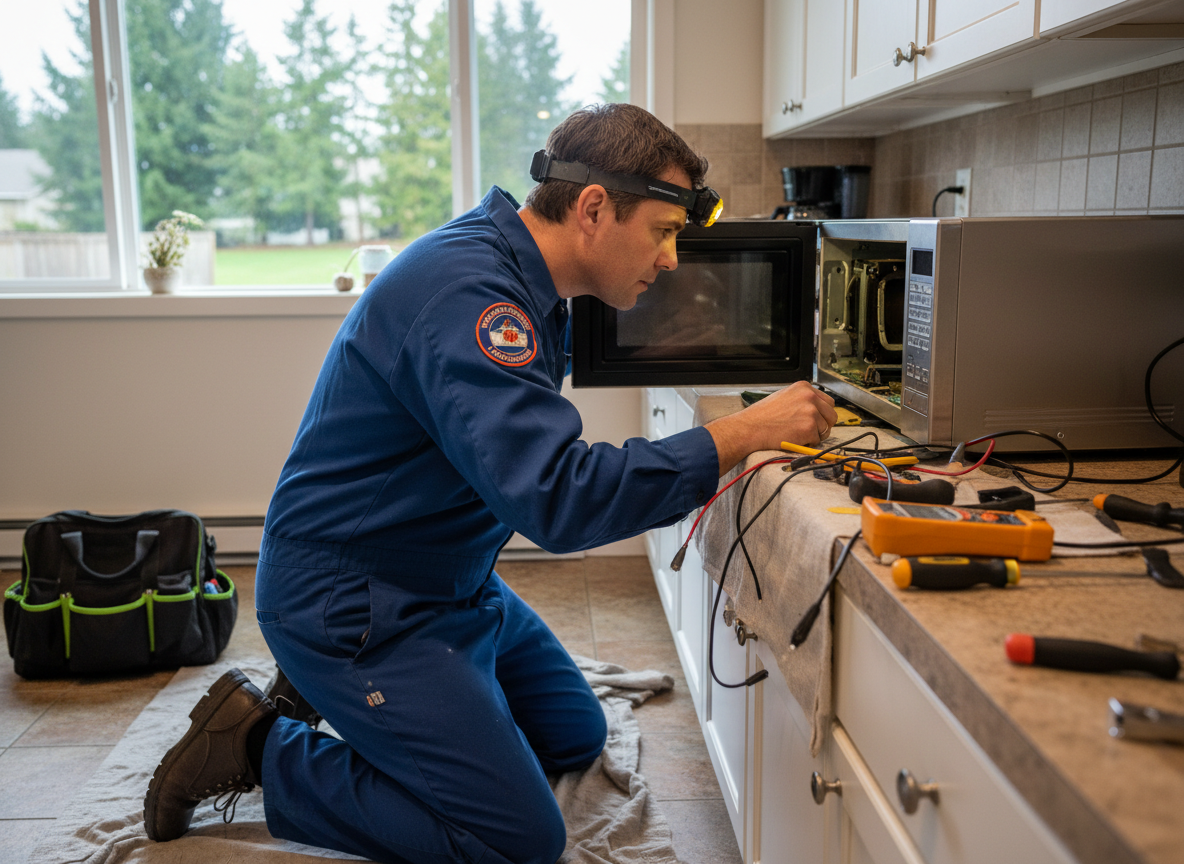
Microwave repair in Gresham often involves high-voltage capacitor discharge and magnetron testing on units installed in homes built before the 1990s in Rockwood and near Gresham Pioneer Cemetery. Wet winters bring humidity that corrodes control boards and door switches faster than in drier climates, especially when mild summers allow condensation to linger inside cabinets. Technicians working from Multnomah County must check for water intrusion around vents after flooding events that affect low-lying streets near Mt. Hood Community College. Proper grounding checks prevent nuisance trips on older circuits common in Portland-adjacent neighborhoods.
Edge cases include over-the-range models venting into attics where roof leaks from winter rains introduce moisture directly onto the waveguide cover. Replacement parts must match exact OEM specs because aftermarket diodes fail quickly under the voltage fluctuations seen during storm season. Homeowners in Downtown Gresham frequently report turntable motors seizing after years of exposure to kitchen steam combined with outdoor dampness. Always verify the interlock switches function before reassembly to avoid radiation leakage risks that local building codes address during inspections.
Service calls in this area require confirming the unit sits on stable countertops because uneven settling from Multnomah County soil conditions can misalign the door seal over time. Technicians carry specific tools for accessing hidden screws on popular brands found in homes surrounding Mt. Hood Community College. Seasonal guidance includes inspecting exhaust fans before winter to reduce internal moisture buildup that shortens component life in Gresham’s climate.
Technician insight
In Gresham, the thing that catches most people out with microwave repair is humidity from wet winters seeping into older Rockwood homes and corroding boards near the Pioneer Cemetery area. The mild summers let moisture sit instead of drying out, so what looks like a simple no-heat call often turns into a full control panel job once you open it up.
Humidity-Damaged Control Board
Homeowner in Rockwood reported the microwave running but not heating after heavy winter rains. Inspection showed corrosion on the board from attic moisture. Replaced the board and verified door seals met safety standards before restoring full operation.
How it works
- 1
Initial Assessment
Technician arrives and runs a full diagnostic on the microwave, checking power supply, controls, and safety interlocks.
- 2
Component Testing
High-voltage parts including the magnetron, diode, and capacitor are tested for failure points caused by local humidity.
- 3
Repair or Replacement
Faulty parts are replaced with compatible components and the unit is reassembled with attention to door alignment.
- 4
Safety Verification
Final checks confirm no radiation leakage and proper function before returning the appliance to service.
Pricing
Upfront quotes provided after diagnostic; rates vary by part availability and model age.